
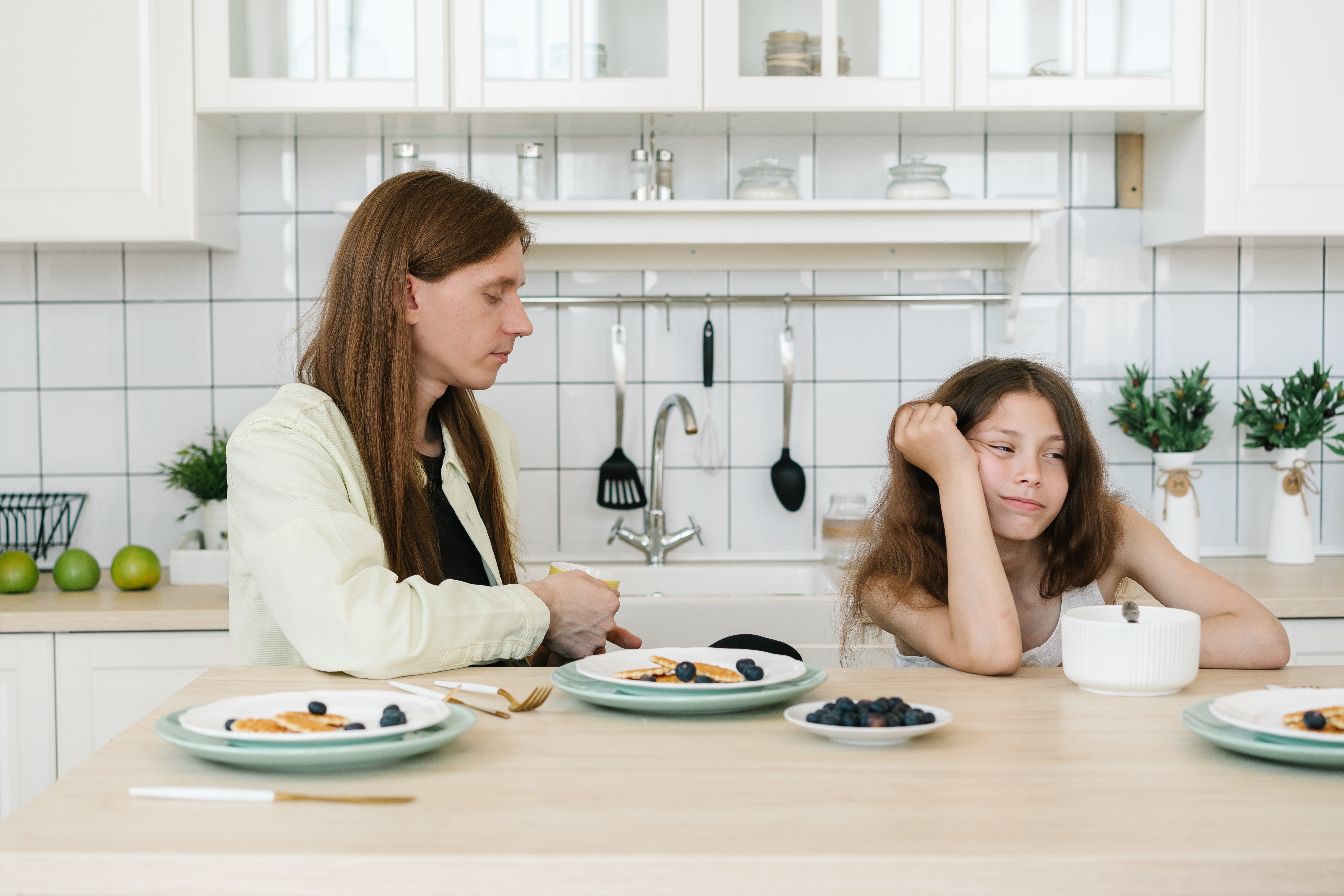
Mothers who have narcissistic personality disorder can cause their daughters an immense amount of psychological trauma, especially if the mother with NPD is not currently receiving mental health treatment to manage the symptoms of NPD. If your daughter’s mother is suffering from NPD and you both have custody, there are some things you can do to mitigate the emotional trauma a narcissistic parent can cause. By giving your child a loving and supporting home where their emotional needs are met, and they feel loved and respected, you can make a difference in your child’s life.
Why Can’t You Be More Like …
Many mothers suffering from narcissism have ideas about what their daughter should be like, regardless of whether or not it aligns with who their daughter actually is. Some mothers may be trying to live vicariously through their daughters. Imagine a woman NPD who never realized her dreams of becoming a pageant queen, and now needs her daughter to become the pageant queen. Or some mothers with NPD may feel slighted if their daughter shows interest in things that the mother doesn’t like or isn’t interested in. A mother like this may feel unloved or unappreciated by the daughter. The result is the daughters who feel like they have to be a certain way in order to please their mothers. Many times, these daughters spend their childhoods so wrapped up in trying to be what their mothers need, that they never learn who they are and what they want for their lives.
Boundaries? What?
Mothers with narcissistic traits or NPD generally have a difficult time establishing healthy boundaries with their daughters. Many mothers with NPD are overly involved in their daughters’ lives. Some mothers with NPD become overly reliant on their daughters. In these types of households, the daughters are forced to cater to their mother’s emotional needs, and they often walk on eggshells trying to do so. Mothers with NPD may also be controlling. A mother with NPD who shares custody of the daughter may call her daughter incessantly during the father’s parent time in order to check in on the daughter. These mothers may even believe that their daughters quite literally need them to check on them, and this behavior does not generally stop when the daughter reaches adulthood. Many daughters who are married with families of their own struggle with asserting boundaries when their mother stops by unexpectedly. Not only do these daughters grow into women who struggle to establish boundaries, it may also cause these daughters to grow into women who are pathological people-pleasers.
Look What You’re Doing to Me!
A lot of mothers who struggle to see their daughters as a separate person. Instead, everything that the daughter does is a reflection of the mother. For daughters of mothers with NPD, the mother often struggles not to take negative emotions personally: “how could you possibly be depressed after all I’ve sacrificed for you?” In these situations, the daughter may grow into an adult with an insecure attachment style. This is because the daughter has learned that, her mother will be displeased by any negative emotions. Because of this, daughters of narcissistic mothers may struggle to recognize, cope with, and express certain emotions in adulthood.
Jealousy and Competition
Mothers who struggle with narcissistic traits may be jealous of their daughters, especially if the daughter succeeds in a way that the mother never did, but always wanted to. For example, if a woman with narcissistic personality disorder is overweight, she may resent the fact that her daughter is thin. Mothers with narcissistic personality disorder may also treat their relationships with their daughters as a competition, needing to be the center of attention each time. Generally when the daughter achieves something, the mother steals the spotlight and draws the attention back to herself.
What You Can Do
Usually, simply having narcissistic personality disorder isn’t enough to prevent a parent from getting custody. If your ex has NPD, it’s possible that they could end up with at least some custody. You can help your daughter grow up by providing a stable environment in which she feels loved and accepted. While mothers are typically a crucial female role-model in a girl’s life, they are by no means the only female role-model. In addition to providing an accepting and nurturing environment, you can also make sure your daughter is surrounded by strong female role-models (such as grandmothers, aunts, step-mother etc.) who can act as mentors in times of need.